We are very excited to announce our investment in Opyn, a decentralized options marketplace. If…


Crypto / Blockchain, Marketplaces / Social / Collaboration / Network Effects
Marketplace innovation comes in waves and we can point to a handful of major trends over the past two decades: Right now, the most exciting area in marketplace innovation is blockchain-enabled marketplaces, especially with what is happening in decentralized finance. The Ethereum ecosystem has enabled the emergence of a tremendous number of protocols, platforms and […]
 boris
borisWe are very excited to announce our investment in Opyn, a decentralized options marketplace. If…
A few weeks ago, we hosted our second marketplace meetup in San Francisco. The night…
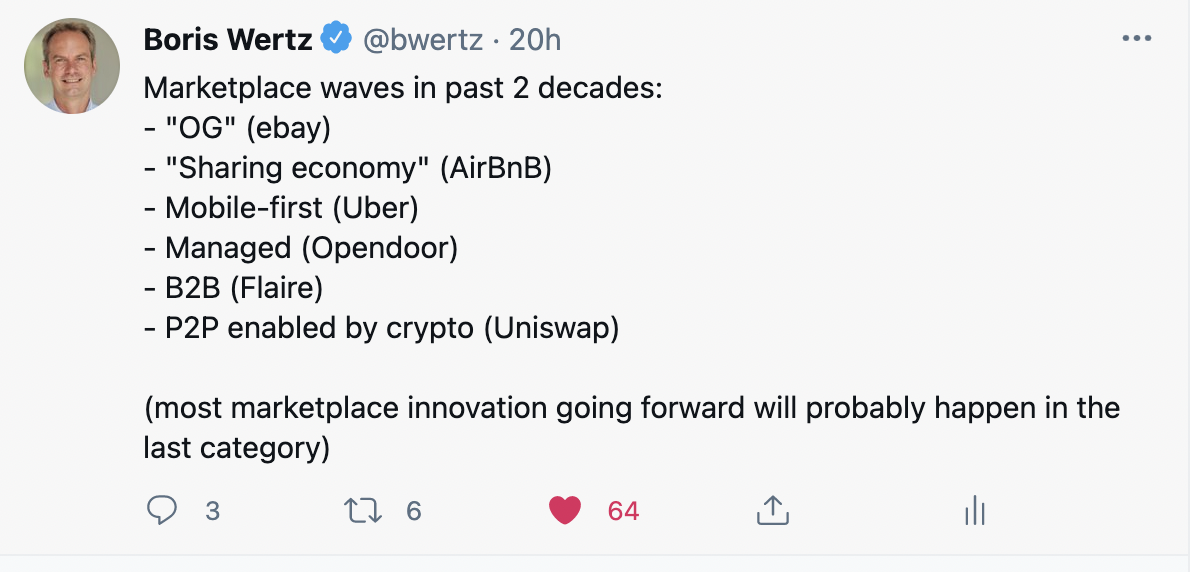
Marketplace innovation comes in waves and we can point to a handful of major trends over the past two decades:
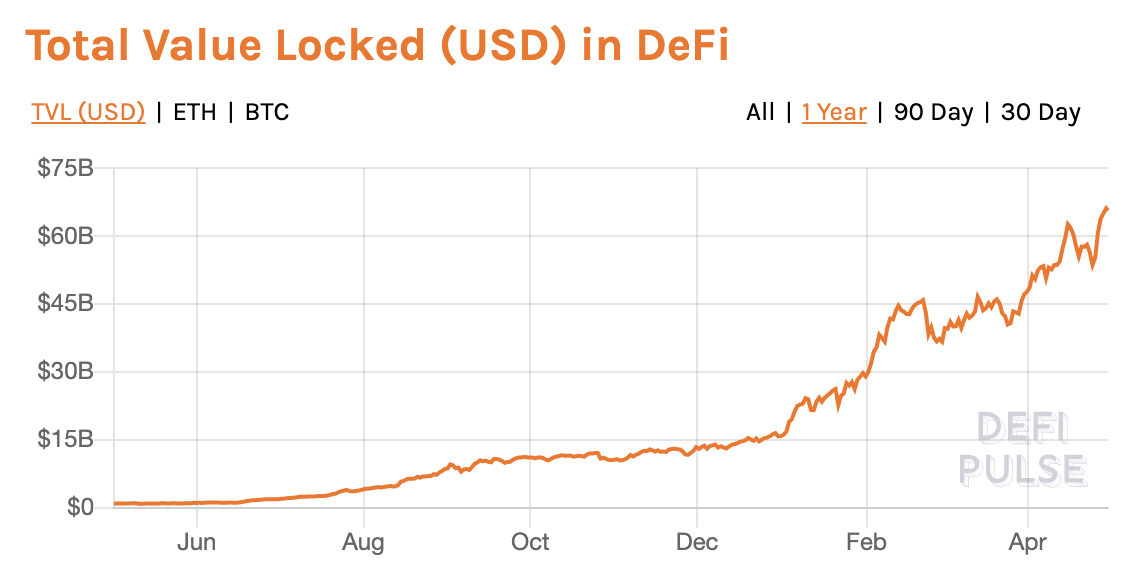
Right now, the most exciting area in marketplace innovation is blockchain-enabled marketplaces, especially with what is happening in decentralized finance. The Ethereum ecosystem has enabled the emergence of a tremendous number of protocols, platforms and exchanges that power P2P interactions around trading (Uniswap), lending (Compound), option & derivatives (Opyn) and insurance (Nexus Mutual). It’s almost unbelievable to see total value locked (TVL) go from just under $1B to almost $70B in just one year!
So, what are the most important aspects of marketplace innovation in blockchain-enabled marketplaces? We can break it down to three things:
The composability of blockchains and the digital nature of the underlying supply has made onboarding of new supply incredibly easy. This is currently limited to on-chain assets, but we will see the tokenization of every asset over time (e.g. check out David Gabeau’s post on the “tokenization of natural assets”).
Even if you don’t have supplier mindshare to take their assets onto your platform, you can easily bootstrap a marketplace on the supply side given the public nature of on-chain assets.
Blockchain protocols can easily offer incentives to both the supply and demand sides to solve the chicken and egg problem, radically shortening the period until true network effects can kick in. These incentives can happen either ex-posteriori via an airdrop (rewarding early users of the protocol once a public token is launched – most famously pioneered by Uniswap) or with ongoing rewards to promote certain behaviours.
Crypto marketplaces are P2P marketplaces without a middleman taking fees for connecting buyers and sellers. Governance rests in the hand of the community who can decide on what fees to charge (if any) and how to distribute those fees. The value that a protocol and platform is creating is hence accruing to the community of token holders and users – resulting in much better alignment.
Decentralized autonomous organizations are still early in their development and many of the governance aspects and processes still need to be figured out, but the general idea is so powerful that it might be the dominant business and governance model for any marketplace going forward.
Crypto marketplaces are marketplaces on steroids: frictionless onboarding of supply; better and more targeted incentives for buyers and sellers at any stage of a marketplace evolution; and a better and fairer business and governance model. This all creates a powerful combination that will be adopted by marketplaces across the board over time.
Version One
Over the past 13+ years, we’ve written a lot on this blog — investment announcements, portfolio recaps, year-in-reviews. But a handful of posts have captured something deeper: the ideas and convictions that actually guide how we invest. If you’re a founder trying to understand what makes us tick, or just curious about how our thinking […]
borisTwo weeks ago, Boris recapped our fund and portfolio activity in what has been a…
In recent posts, we've outlined our updated thesis around backing mission driven founders and explained…