The predominant narrative among Silicon Valley start-ups has been: don’t open a second office until…

Entrepreneurship
A question I have been pondering for some time now, especially since a lot of our portfolio companies are now distributed organizations… This tweet sparked a lot of thoughtful reaction and discussion. Here’s where things have landed at the moment: According to the responses, entrepreneurs running remote organizations seem pretty happy with the current software […]
 boris
borisThe predominant narrative among Silicon Valley start-ups has been: don’t open a second office until…
We don’t need to tell anyone how much Covid has changed the workplace. The pandemic…
A question I have been pondering for some time now, especially since a lot of our portfolio companies are now distributed organizations…
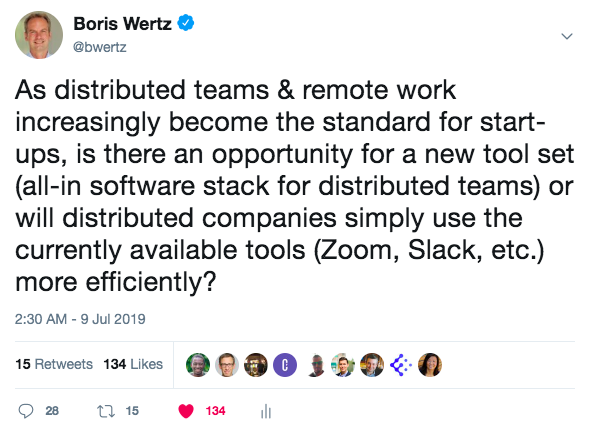
This tweet sparked a lot of thoughtful reaction and discussion. Here’s where things have landed at the moment:
According to the responses, entrepreneurs running remote organizations seem pretty happy with the current software stack. The most commonly mentioned tools were various combinations of GSuite, Zoom, Slack and Trello.
There was a general feeling that different tools could be better integrated, with a few commenting about the need for an integration layer/wrapper on top of the different tools. Of course, this is not unique to remote workers, but applies to the overall software stack. I think it’s a general trend/opportunity that we’ll see over the next few years as more and more specialized tools emerge as category leaders.
I think the biggest product opportunity for distributed teams is in solving the pain paints that remote work introduces…specifically, the lack of personal interaction and how to build and scale culture in remote teams. Most remote teams are trying to solve these challenges through process right now. For example, some add a Zoom link for meetings or host bi-annual, company-wide get-togethers to build personal connections. But, there has got to be additional opportunities where better tools can help companies overcome these pain points.
Looking into the future, the most interesting question is what a fully decentralized / remote workforce looks like. How can you organize contracting and paying remote people at scale and manage to incentivize them? In this respect I am very excited to see how projects like Aragon will play out, truly removing geography from the set-up of an organization.
Version One
Over the past 13+ years, we’ve written a lot on this blog — investment announcements, portfolio recaps, year-in-reviews. But a handful of posts have captured something deeper: the ideas and convictions that actually guide how we invest. If you’re a founder trying to understand what makes us tick, or just curious about how our thinking […]
borisTwo weeks ago, Boris recapped our fund and portfolio activity in what has been a…
In recent posts, we've outlined our updated thesis around backing mission driven founders and explained…